
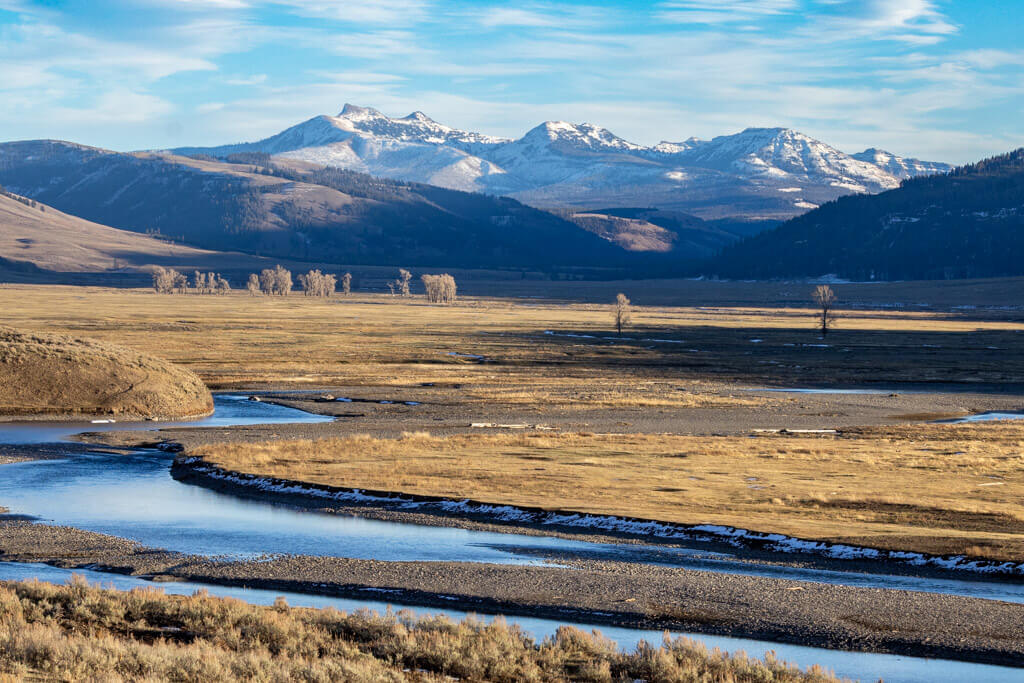
How changing daylight, weather, and food availability guide the journeys of songbirds, waterfowl, and raptors as they prepare for winter beyond Yellowstone.
By Mary Ricker, Institute Field Educator
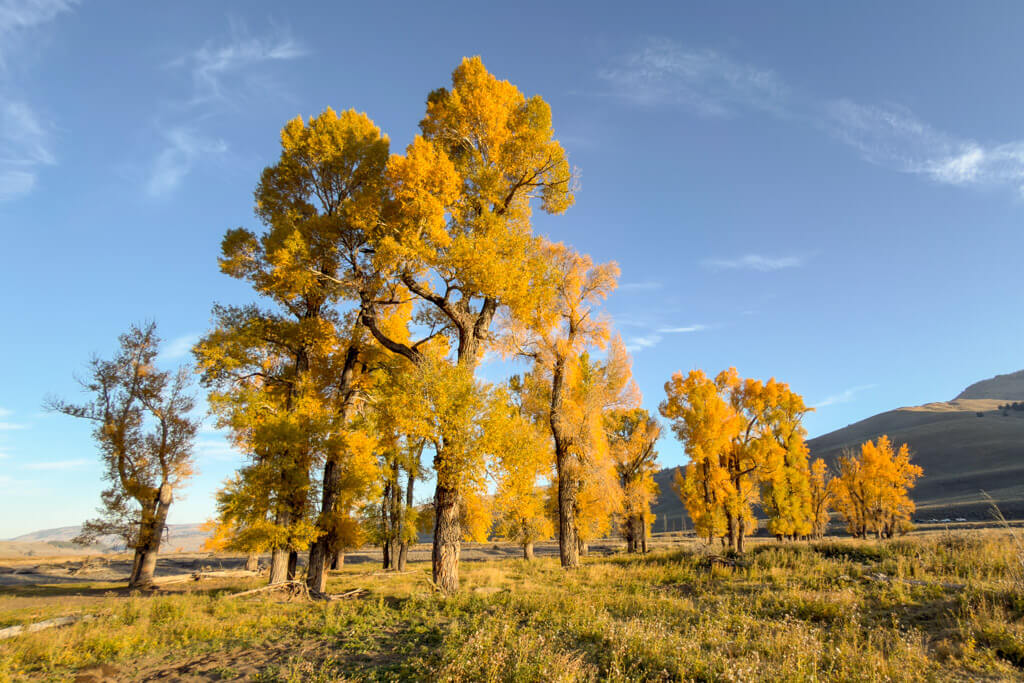 Signs of the changing seasons are showing up all over Yellowstone’s landscape. The aspens have begun to turn gold, and the willows are becoming shades of bronze and rust. Water sources continue to shrink, and bison wallows are turning to dust bowls.
The days are getting shorter and soon it will not be as difficult to get to Lamar Valley before first light. Frost may cover the ground as the bison crunch through the grasses.
Blackbirds are grouping up into large flocks. Mixtures of Brown-headed Cowbirds and Brewer’s Blackbirds make raucous calls as they erupt from the grasslands. Raptors can be seen riding the midday thermals or scanning the valley looking for the scarce ground squirrels who have not yet gone into hibernation. As the sun sets over the valley and light fades, the buzzy calls of Nighthawks fill the sky.
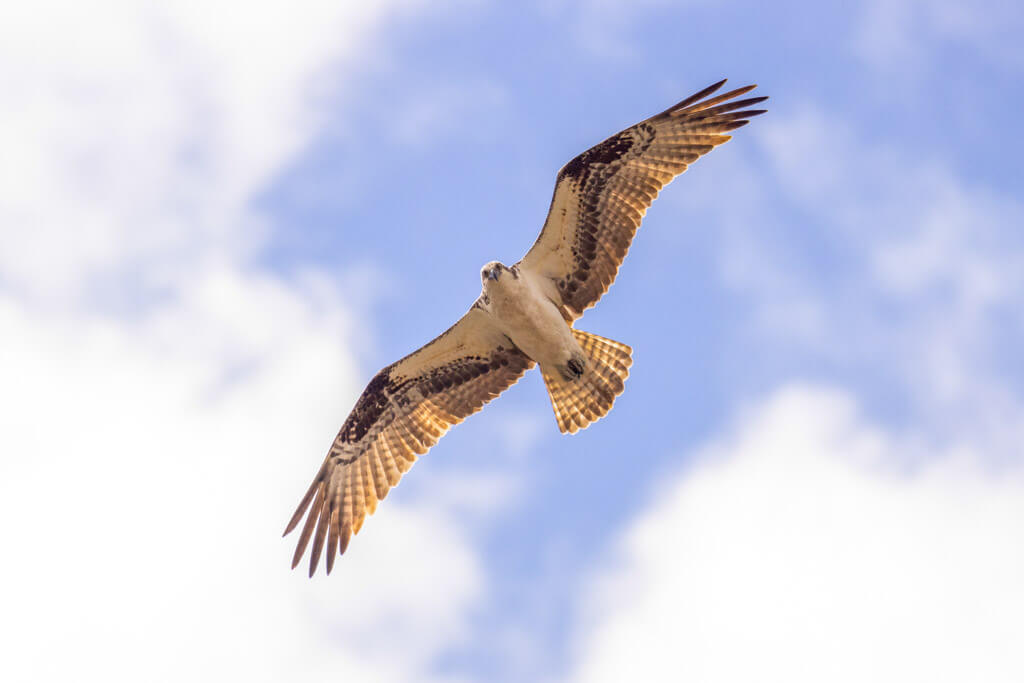
Every autumn, bird migration takes place through Yellowstone National Park along the Rocky Mountain Flyway. Many species of birds may use the Greater Yellowstone Ecosystem as an important migratory stopover point to support their long journey south. Some species such as Peregrine Falcons and Ospreys will go as far as South America to continue to find abundant food sources.
 Weather conditions are increasingly unpredictable this time of year, but the decreasing daylight continues to be a reliable cue to migratory species. This, combined with their internal biological clocks and flock dynamics, prompts many species of birds to group up with others and begin the intensive journey to better resources.
Birds of all kinds work to replenish fat reserves for their journeys out of the park. Breeding residents like Yellow Warblers have spent the summer bouncing from branch to branch on streamside willows searching for small caterpillars and insects. As water decreases and temperatures drop, these insects become less active and less plentiful making it necessary for these little yellow birds to move on.
Approximately 50 bird species use the park year-round. While many insect eating birds like warblers and flycatchers will be the first to leave the park, some continue to find excellent food sources within Yellowstone during the fall. A trip on Dunraven Pass may afford the view of a black bear high in a Whitebark Pine tree. Bears are enjoying the fat rich pine nuts from the tree’s cones. But the sight of a Clark’s Nutcracker with its sublingual pouch bulging, full of these same pine nuts, can be another cherished sighting.
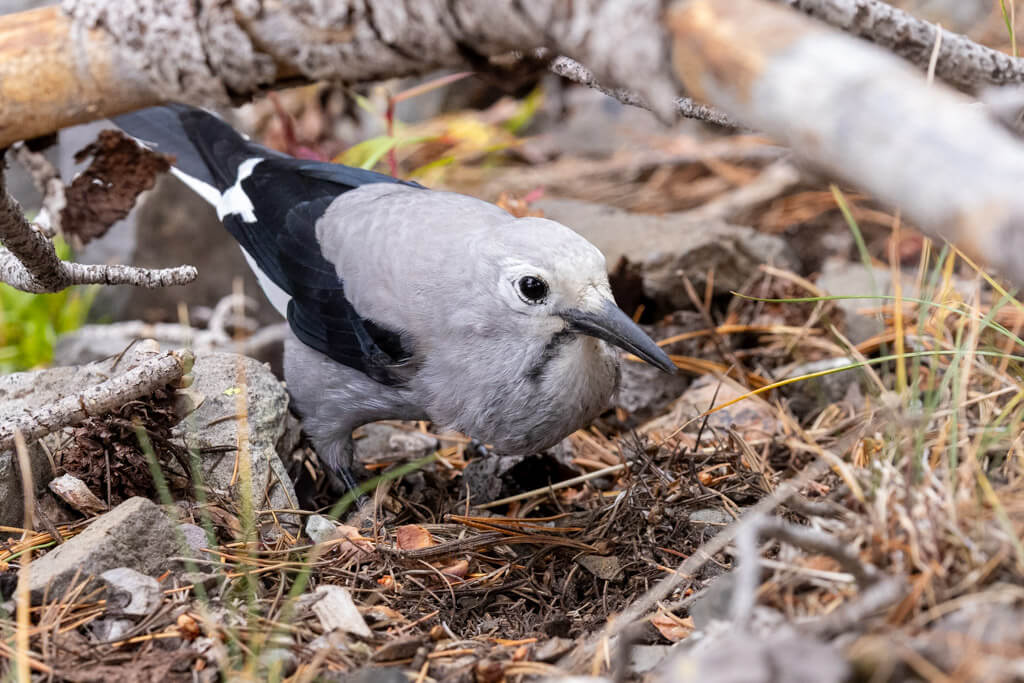 A jay sized gray bird with striking black and white wings, the Clark’s Nutcracker is a year-round resident of YNP. It caches these pine nuts as well as other seeds to utilize during the winter months when food is less abundant, meaning they do not need to migrate long distances like other species.
Some species have populations that use the park year-round, but their populations counterintuitively expand in the winter. In 2025, Yellowstone had 5 breeding pairs of Trumpeter Swans, but many more nest farther north on Alaskan and Canadian marshes. As they receive cues of lessening daylight and dropping temperatures, they make their way south, with some coming into Yellowstone to spend the winter months in large flocks in the park’s interior. The thermally influenced waters of the park’s rivers, like the Yellowstone and Firehole, provide open water and habitat for them through the coldest months, making YNP habitable even through extreme negative temperatures.
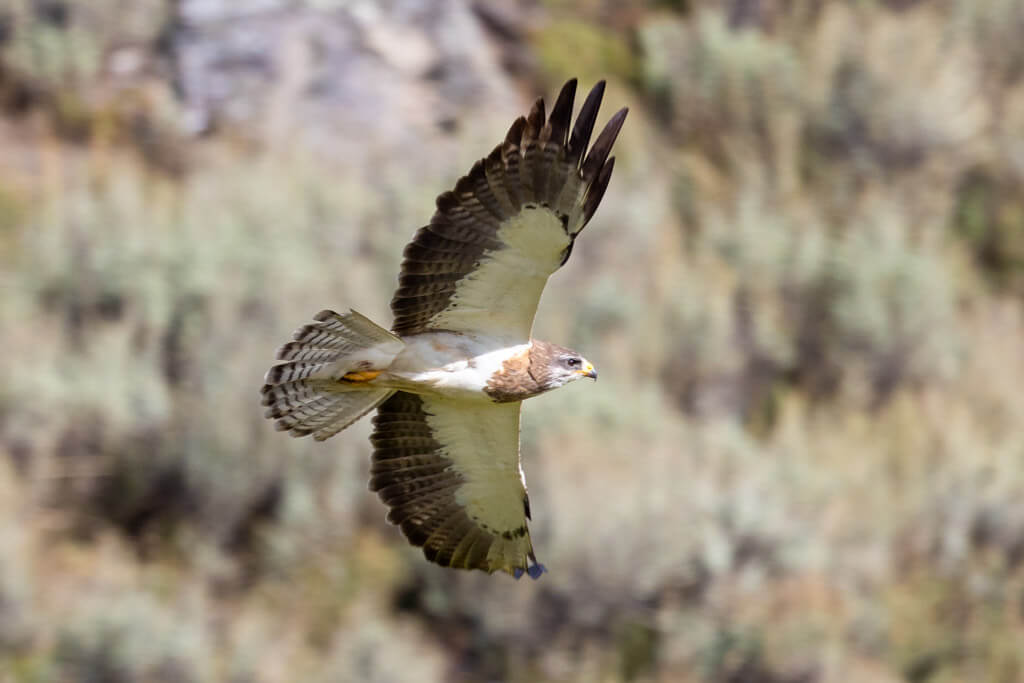
Swainson Hawks fly over 6000 miles to South America each fall. During this time, they concentrate on protein rich foods to fuel their long journey. In the GYE, they are concentrating on eating Yellowstone’s noisy grasshoppers, earning them the nickname of grasshopper hawk. Kettles of dozens at a time can be seen in Hayden Valley during October as they ride thermals above the open grasslands.
 The vast majority of bird species make their migratory flights at night. CornellLab’s BirdCast uses weather radar to predict and detect the number of birds in flight each night. You can use this in your own community to predict flyovers and increase your chances of seeing large groups of birds in the days leading up to and following these nights.
It can also be a useful tool to help us concentrate efforts for Lights Out initiatives.
Limiting light pollution during bird migration times can decrease window strikes and decrease interference with their navigation strategies.
Whether you find yourself in Yellowstone National Park or wherever you call home, birds are migrating through your community and overhead each day and night. Many of us will notice the shortening days and cooling temperatures as fall progresses. This can be an opportunity to practice your naturalist skills, slow down, and observe how wildlife in your area is reacting to these changes.
Click here to learn about our wide variety of Yellowstone Forever Institute programs and tours.
Photos:
Feature: Lamar Valley autumn view, YF / Matt Ludin
Lamar Valley cottonwood trees, YF / Matt Ludin
Flying osprey, NPS / Jacob W. Frank
Clark’s Nutcracker full with whitebark pine seeds, YF / Matt Ludin
Swainson’s hawk in Hayden Valley, NPS / Jacob W. Frank
Comments are closed.