
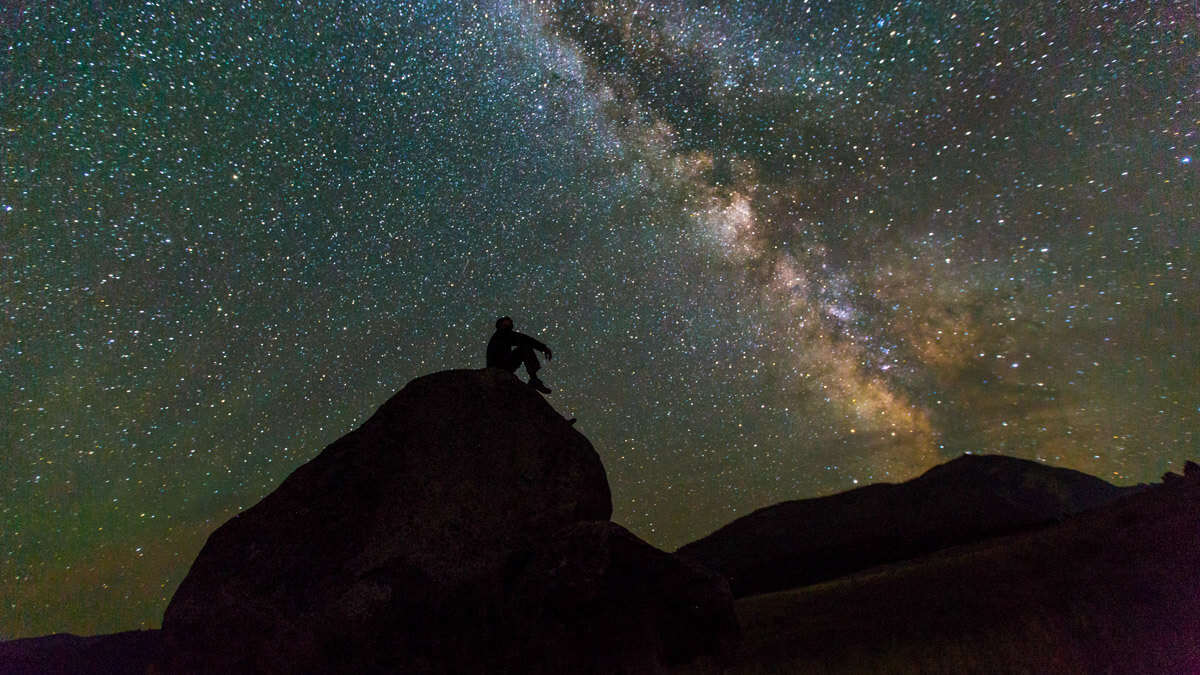
by Chris La Tray
Countless generations ago when the world was still new, there was an endless abundance of springtime. The Anishinaabek – the “Original People” or, even better, the “People Who Live upon the Earth in the Right Way” – lived in constant pleasure, generally free of suffering, every need easily met and provided for by Aki, Mother Earth. People being people though, it wasn’t destined to last; disharmony would emerge that would lead to conflict and destruction … which is a story for another time.
Before all that though was this: the arrival of a newcomer, a spirit who paddled in on his canoe from the north, and with him came a cold unimaginable to anyone. That newcomer spirit came to be known as Biboonkeonini, the Wintermaker. This story is one of the earliest examples to explain how humans adapted to live in the world, season to season, leading to stories about how humans were gifted fire, how Ziigwan, or Spring, tricked Biboonkeonini into releasing his grasp on the world, etc. Importantly, today we still look for the arrival of Biboonkeonini when he arrives in the night sky in late fall, or Dagwaagin, in anticipation of the season that bears his name. He is a bright constellation who spreads across the sky throughout winter – Biboon – in the northern hemisphere.
You may know this constellation as Orion, and maybe you note his arrival as a harbinger of the coming cold too.
I often reflect on a time when humans understood and were as familiar with the night sky in all seasons as we are now with the home screens on our diabolical smartphones. The stars weren’t just sign posts directing us across a vast landscape, they were messengers that connected us to the eternal circle of existence, of seasonal changes that connected us to animal migrations and the availability of different foods and medicines essential to our survival. Our existence depended on our understanding of the stories shared across the endless sky by our star relatives.
Those cycles live in us still, and Greater Yellowstone, the ecosystem that bears the name beyond the borders of the park itself, is a place that draws us closer to those kinds of observations. For all the crowds and development (and road construction!) that sometimes frustrates those of us who frequent the place, we remain closer to who we have been for all but the tiniest blip of time as Original People on this land when we are on this land. That primal, heart-deep understanding is what stirs the spirits of so many people, even those arriving here for the first time. For some, it might even lead to their first experience of seeing a star-filled sky, uninhibited by light pollution, at all.
Whether that magnificent, belted celestial being lives in you as Orion or Biboonkeonini or any of the other aspects celebrated by the myriad Native cultures who frequent Yellowstone, we all find ourselves anticipating the coming winter, with high hopes for one of a different kind of abundance. An abundance that leads to snowpack high in the mountains that is necessary to swell
our springs and creeks and rivers with water when spring arrives, and wolf pups and bison calves emerge onto the land, and so many other awakenings. An abundance of huddling around fires, metaphorical or real, telling stories to pass long nights of deep cold and darkness, that remind us of who we are.
Comments are closed.