by Amanda Evans, Institute Lead Field Educator
It was my first winter in Yellowstone, a time of great growth as I learned to adapt alongside the wildlife that I shared this home with. As I finished the short steep descent coming down the Trout Lake trail, I eagerly made my way into the warmth of my car. I could feel the life trickle back into my chilled fingers and toes. Though the day was a gorgeous bluebird day, I was new to real cold! As I sat for a moment enjoying the embrace of heat, a swift movement on the snow caught my eye.
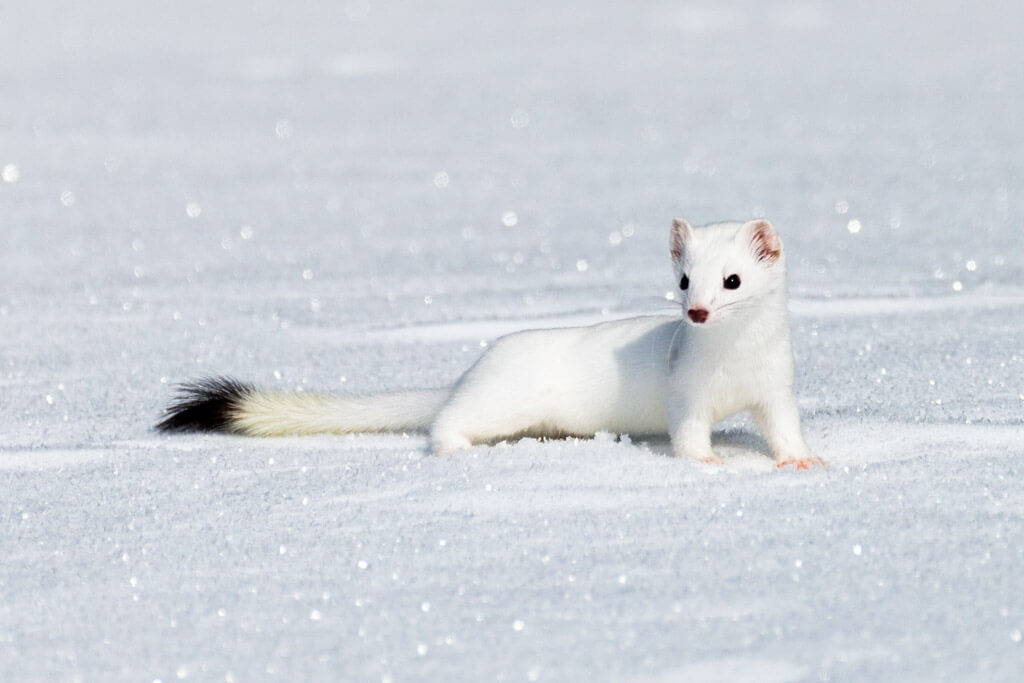
 A black spot appeared to be moving of its own accord before I realized what it was—the tip of an ermine tail! The rest of its coat was a perfect match against the white sheet of snow, and its camouflage was only given away by its dark tail tip, eyes, and nose. This small but ferocious predator leaped and bounded across the curtain of white in search for rodents before disappearing into the ivory fluff over a hill.
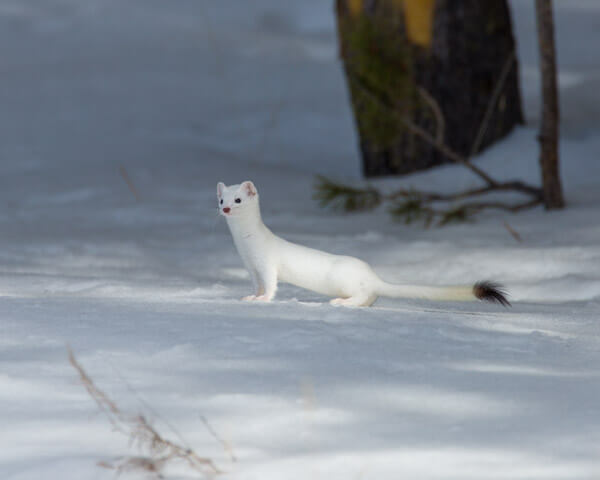
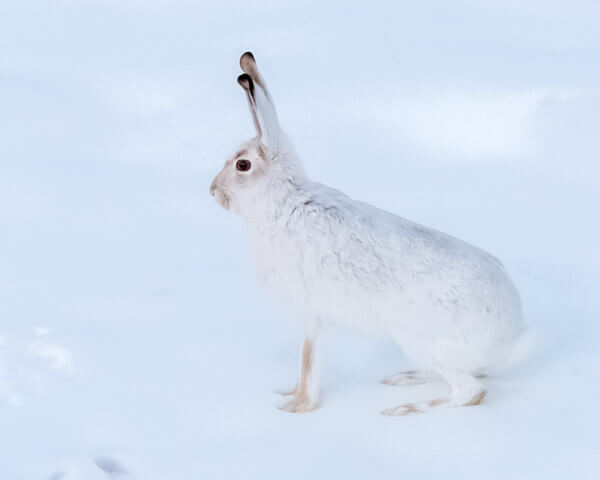 Winter acts as a powerful architect of evolution. For Yellowstone’s short-tailed (Mustela richardsonii) and long-tailed weasel (Neogale frenata), both referred to as ‘ermine’, a term more conveying of refinement when worn as a coat, turn white in winter. In addition, the snowshoe hare (Lepus americanus) and the white-tailed jackrabbit (Lepus townsendii) change in pelage from the burnt umber of summer to the frost of winter. Not only does this act as superior camouflage, but the translucent hairs of the white coat trap air to allow for better heat retention, keeping these small creatures warmer as they maintain a living on the snow-covered ground.
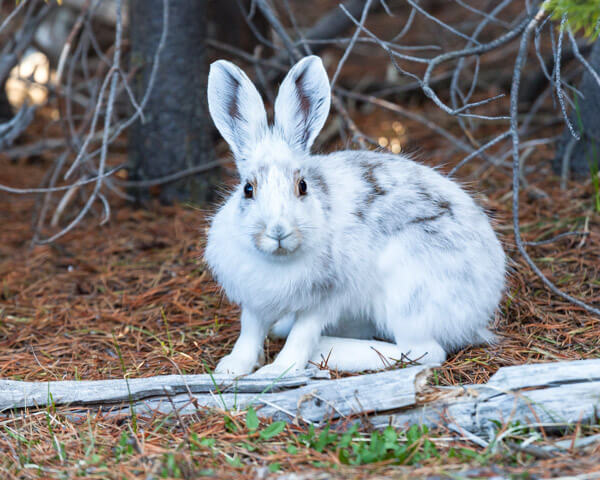 While the weasel, hare, and jackrabbit’s color change is an adaptation to winter, it is triggered not by the unpredictable date of the first onset of snow, but instead by the decreasing photoperiod, or hours of daylight. As the date of the first snow has continued to come later and later with the warming of our climate, Yellowstone has on average 30 fewer days of snow-covered ground than it did 50 years ago. However, these animals are still responding to the amount of sunshine, making them vulnerable to predation as their coats begin to turn white before the surrounding landscape does.
The first snows have started to fall here in Yellowstone, the curtain of white has begun to creep down from the tops of the surrounding mountains, and the hours of sunshine continue to dwindle as we approach the solstice, ermine have begun to turn white – a sure sign winter has arrived!
Photos Top to Bottom: ermine, White-tailed jackrabbit, Snowshoe hare
YF / Matt Ludin
Comments are closed.