


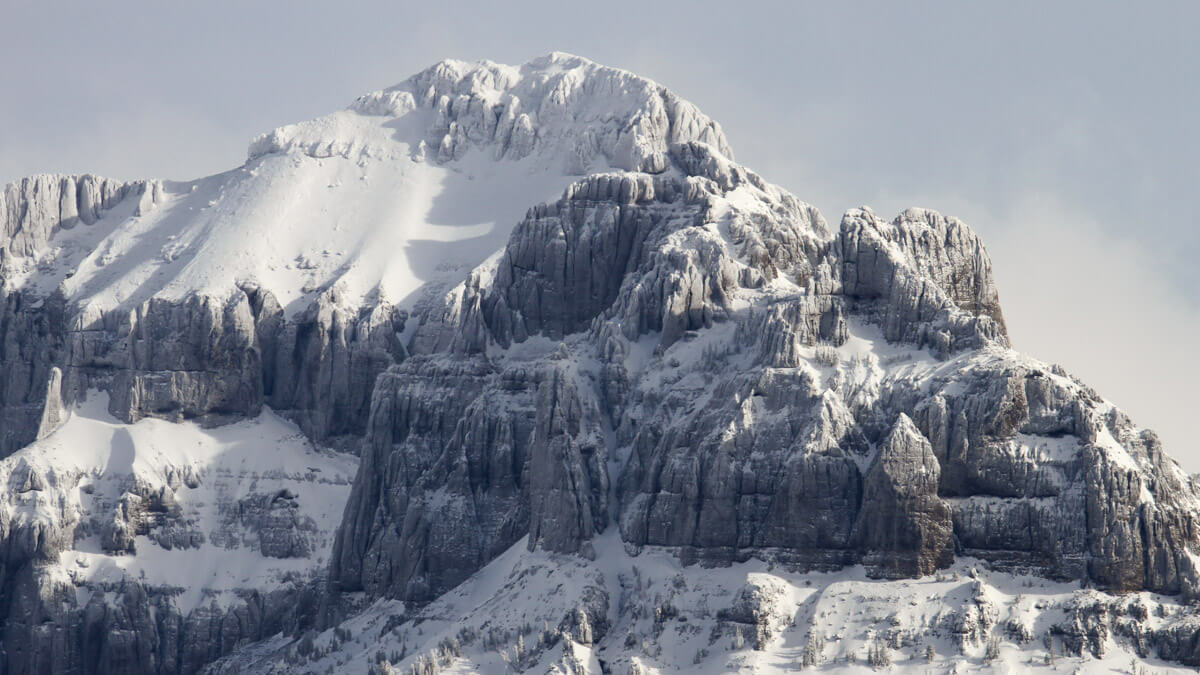
On a crisp January morning, when the air holds its breath and the only sound is the soft rasp of a raven’s wings overhead, it’s easy to think of winter in Yellowstone as a season of stillness. But beneath the slowly building snowbanks lies the park’s most vital engine. Snowpack – patient, glittering, and ever changing – is the reservoir that fuels the entire year. Every meadow bloom, every chorus frog call, every August riffle alive with trout begins with the snow that settles today.

YF / Matt Ludin
Snow in Yellowstone is far more than frozen water. It’s an archive. Each storm lays a layer: powder, wind slab, dense lake effect snow. Over the season, these layers compact into a reservoir measured not by depth, but by snow water equivalent, or SWE – the true currency of the ecosystem. High basins and shaded slopes act as vaults, holding this wealth long into spring. The brilliance of snow’s surface, its albedo, reflects sunlight away and protects the reserve, giving life the slow drip it depends on.
Timing is the quiet hero in this story. A deep snowpack that melts in a single warm rush can send torrents downstream too quickly for plants and animals to use. But a modest pack that melts slowly can be far more powerful. When water releases in a steady, measured rhythm, cottonwoods find perfect moisture for seed germination, willows stretch new growth for browsing moose and beavers, and wetlands stay full long enough for tadpoles and salamanders to complete their transformations. Life here is tuned not only to how much water flows, but to when it arrives.

YF / Sam Archibald
Follow the path of snowmelt as from the high Absaroka Peaks to hundreds of small rivulets to dozens of mountain streams and eventually to the Yellowstone, Madison, or Snake Rivers and you’ll see its influence everywhere. Cold, oxygen-rich flows give native cutthroat trout the summer refuge they need. Groundwaters recharge, feeding springs that supply wildlife long after surface water retreats. In wet meadows, snow-fed soil moisture turns the landscape vibrant green and supports sandhill cranes, elk calves, and the intricate web of insects that fuel countless birds.
Beavers, the quiet engineers of Yellowstone’s valleys, rely on snow-fed willow stands. When the pack is generous and the melt is slow, willows thrive. Beavers respond by building dams that spread water across floodplains, storing even more moisture for the heat of summer. This creates a feedback loop of life: snow nourishes willow, willow nourishes beaver, beaver nourishes wetland, wetland nourishes the valley.

YF / Amanda Evans
Wildlife reads these cues too. Bison endure winter by sweeping aside snow with their massive heads; deep powder or icy crusts change the cost of survival. Elk migrate right at the edge of snowline, following emerging plant growth. Moose linger in snow-fed willow bottoms where tender shoots last longer. Predators, from wolves to raptors, ride the ebb and flow of these conditions – lean years ripple quickly through the food web.
Plants, too, write their destiny in snow. Glacier Lilies push through recently melted patches, Arrowleaf Balsamroot flares on early-warmed slopes, and sedges carpet the wet places that stay saturated longest. The riverbanks where cottonwoods and willows take root are sculpted each year by the pattern of meltwater rising and receding.
Even fire carries snowpack’s signature. A generous winter can delay fire season, keep fine fuels moist, and lend resilience to forests and sagebrush steppe. But rapid spring growth fueled by melt can dry into abundant late summer fuels if rains falter. Snow doesn’t dictate fire behavior, but it shapes the stage.
People downstream feel winter’s work just as acutely. Ranchers, anglers, boaters, and whole communities depend on the timing and volume of runoff. A cool, steady melt can mean a full irrigation season, clear cold rivers for fishing, and stable flows for recreation. A fast melt or low snow year reshuffles the calendar for everyone, from farmers to river guides.
As winter educators, we learn to read the subtleties: where drifts linger; where wind scours early; how quickly the new powder subsides to denser crust. These small observations build a deeper understanding of how the year will unfold. Snowpack is winter’s quiet promise, a shimmering investment in the seasons ahead.
In the stillness of a Yellowstone winter, it can seem like nothing is happening. But the truth is the opposite. Everything is happening – quietly, patiently, flake by flake.
by Yellowstone Forever Institute staff
RELATED | YELLOWSTONE FOREVER PARK STORE
For information on Yellowstone’s winter ecology and more, check out these resources available at Yellowstone Forever Park Stores and online. All purchases help support critical projects and programs in Yellowstone National Park.


Comments are closed.