DATES: FEBRUARY 1 – 7, 2026
PRICE: $1,555 | TUITION & LODGING
LOCATION: LAMAR BUFFALO RANCH
GROUP SIZE: 14
ACTIVITY LEVEL: 2
PROGRAM INFORMATION
There is no better outdoor classroom than the Greater Yellowstone Ecosystem – one of the largest nearly intact temperate-zone ecosystems in the world. Yellowstone’s wealth of natural and cultural diversity includes the largest concentration of hydrothermal features, 10,000+ years of vast human history, an abundance of wildlife, varied vegetation, numerous lakes, rivers, and creeks, and unique geologic wonders. This certificate-level course will offer participants the opportunity to learn in-depth about this unique and amazing ecosystem. Through a variety of outings, guest speakers, activities, and lectures, participants will gain the skills of a Yellowstone naturalist and will encounter a diversity of winter ecosystems. During this week-long course, participants will learn to understand and interpret wildlife, geology, plants, cultural history, and ecological management of the Greater Yellowstone Ecosystem. With completion of this course, participants will receive a Yellowstone Naturalist certification through Yellowstone Forever in addition to a Montana Master Naturalist certification through the Montana Natural History Center.
DAY 1
WELCOME & ORIENTATION
Evening orientation and introductions, followed by an introduction to nature journaling.
DAY 2
YELLOWSTONE’S BUILDING BLOCKS
Exploring the geology that shapes it all
Meet in the classroom for a morning introduction to geology, then depart for various geological stops across Yellowstone’s Northern Range. After a dinner break, there will be an evening presentation on environmental interpretation practices.
DAY 3
YELLOWSTONE’S BIRDS & BOTANY
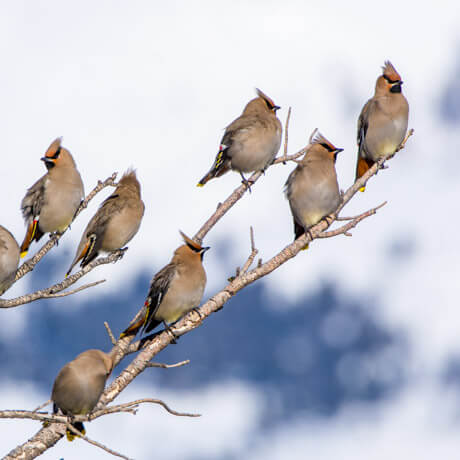
Meet in the classroom for a lecture on birds and their habitats before departing into the field to focus on the birds and plants that call Yellowstone home.
DAY 4
YELLOWSTONE’S WILDLIFE
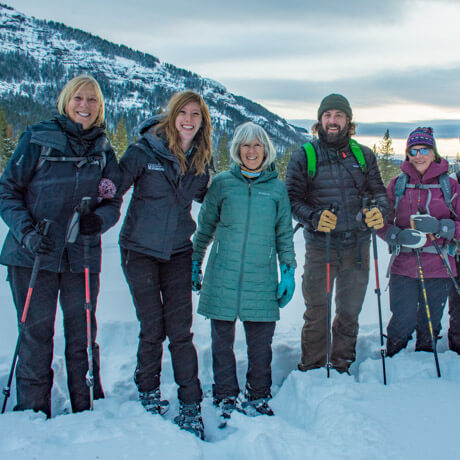
Depart for early morning wildlife watching in Lamar Valley and the surrounding areas. Meet up in the field with a Yellowstone Wolf, Cougar, and Elk Project biological science technician to discuss current wolf management and research. We will return to the Lamar Buffalo Ranch for lunch and a lecture, then depart for an afternoon interpretive snowshoe to a historic site from Yellowstone’s wolf reintroduction efforts.
DAY 5
TRACKING
Reading the stories on the land
Meet in the classroom for a lecture on tracking before departing into the field to look for tracks and other animal sign.
DAY 6
PUTTING IT ALL TOGETHER
After a morning discussion on ecology and putting it all together, students will give their presentations to the class.
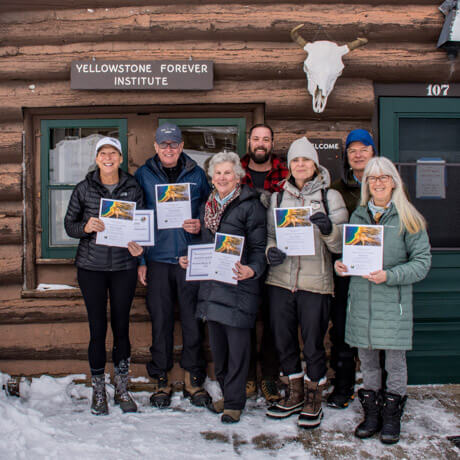
After presentations, certifications will be given out during a closing award ceremony, followed by a final interpretive snowshoe, if time allows.
DAY 7
CHECKOUT & DEPARTURE
Dates & Times: The program begins at 6:00 p.m. on Sunday, February 1, 2026, and goes through Friday, February 6, 2026, at 5:00 p.m.
Lodging Check-in & Check-out: Lodging check-in begins at 4:00 p.m. on Sunday, February 1, 2026, and lodging check-out is at 9:00 a.m. on Saturday, February 7, 2026.
Meals: This course is not catered. Participants will need to bring their own food; lunch should be able to travel in the field.
Whom to Contact: For any questions, concerns, or additional information please contact the following:
Program itinerary, health forms, payment, and general program questions please contact Yellowstone Forever at [email protected] or 406-848-2400 extension 3
Road updates, park conditions, and general park information please contact Yellowstone National Park Service at https://www.nps.gov/yell/contacts.htm
If running late for a program, please contact 406-848-9128.
General Information: For general information about the facilities, preparation for classes, what to expect, cancellation policies, and more, please see the Lamar Buffalo Ranch – Winter General Information document.
ACTIVITY LEVEL 2
- Be prepared for hikes on snow-packed trails, or snowshoe or ski trips, up to 3 miles per day with climbs up to 250 feet.
- Most activities will take place at elevations between 7,200 to 8,000 feet. Participants residing at lower elevations may want to arrive a day early to adjust to the altitude.
- To learn more about how specific medical conditions can be affected by Yellowstone’s environment and our activities, please visit our site page on health information.
- All field activities will be conducted as a group. If members of the group cannot participate in the day’s activities, they need to let the educator know in advance.
- To participate in this program, each participant must fill out and sign a health questionnaire and assumption of risk waiver. These forms must be completed and returned at least 30 days prior to the program start date.
- YF will provide:
- nature journals
- art supplies
- plaster for track casting
RECOMMENDED READINGS
- Bumann, G., & Young, J. (2024). Eavesdropping on Animals: What We Can Learn from Wildlife Conversations. Greystone Books.
- Fritz, W. J., & Thomas, R. C. (2011). Roadside Geology of Yellowstone Country. Mountain Press Pub. Co.
- Halfpenny, J. C. (1986). A Field Guide to Mammal Tracking in North America. Johnson Books.
- Kimmerer, R. W. (2013). Braiding Sweetgrass: Indigenous Wisdom, Scientific Knowledge and the Teachings of Plants. Milkweed Editions.
- Laws, J. M. (2018). The Laws Guide to Nature Drawing and Journaling John Muir Laws. Heyday.
- Smith, D. W., Duffy, K., Walker, L. E., & Landis, B. (2023). Yellowstone’s Birds: Diversity and abundance in the world’s first National Park. Princeton University Press.
- Tilt, W. (2015). Flora of the Yellowstone: A Guide to the Wildflowers, Shrubs & Trees, Ferns, and Grass-like Plants of the Greater Yellowstone Region of Idaho, Montana, and Wyoming. Published by Gallatin Valley Land Trust.
- Young, J., & Gardoqui, D. (2013). What the Robin Knows: How Birds Reveal the Secrets of the Natural World. Mariner Books : Houghton Mifflin Harcourt.
Whom to Contact: For any questions, concerns, or additional information please contact the following:
Program itinerary, health forms, payment, and general program questions please contact Yellowstone Forever at [email protected] or 406-848-2400 extension 3
Road updates, park conditions, and general park information please contact Yellowstone National Park Service at https://www.nps.gov/yell/contacts.htm
If running late for a program, please contact 406-848-9128.
General Information: For general information about the facilities, preparation for classes, what to expect, cancellation policies, and more, please see the Lamar Buffalo Ranch – Winter General Information document.
TESTIMONIALS
“I warn you, I may do another one some time.” – Paul, CO
“The people, the campus, and the educational experience. It was magical and I will never forget it.” – Teresa, CO
“So many memorable moments. Too numerous to mention. Amanda Evans was fabulous she anticipated our needs and presented an incredible amount of information continuously. We were always inspired by her, she kept our interest peaked at all times. Amanda curated the park as we drove from site to site never missing an opportunity to teach. The other speakers were so knowledgeable and engaging, I enjoyed and learned from each one of them.” – Patti, MT
BOOK THIS FIELD SEMINAR NOW
Amanda Evans, Lead Field Educator
Amanda Evans is a Lead Field Educator for Yellowstone Forever. After extensive wildlife and outdoor education experience in a variety of ecosystems derived from a lifelong passion for wildlife, she has lived and worked on the edge of Yellowstone for the past five years. She feels that it is through firsthand experience with the natural world that people build the strongest connections to it. Her goal is to use education to foster the same appreciation she feels and to inspire others to preserve and protect nature in all spaces.