
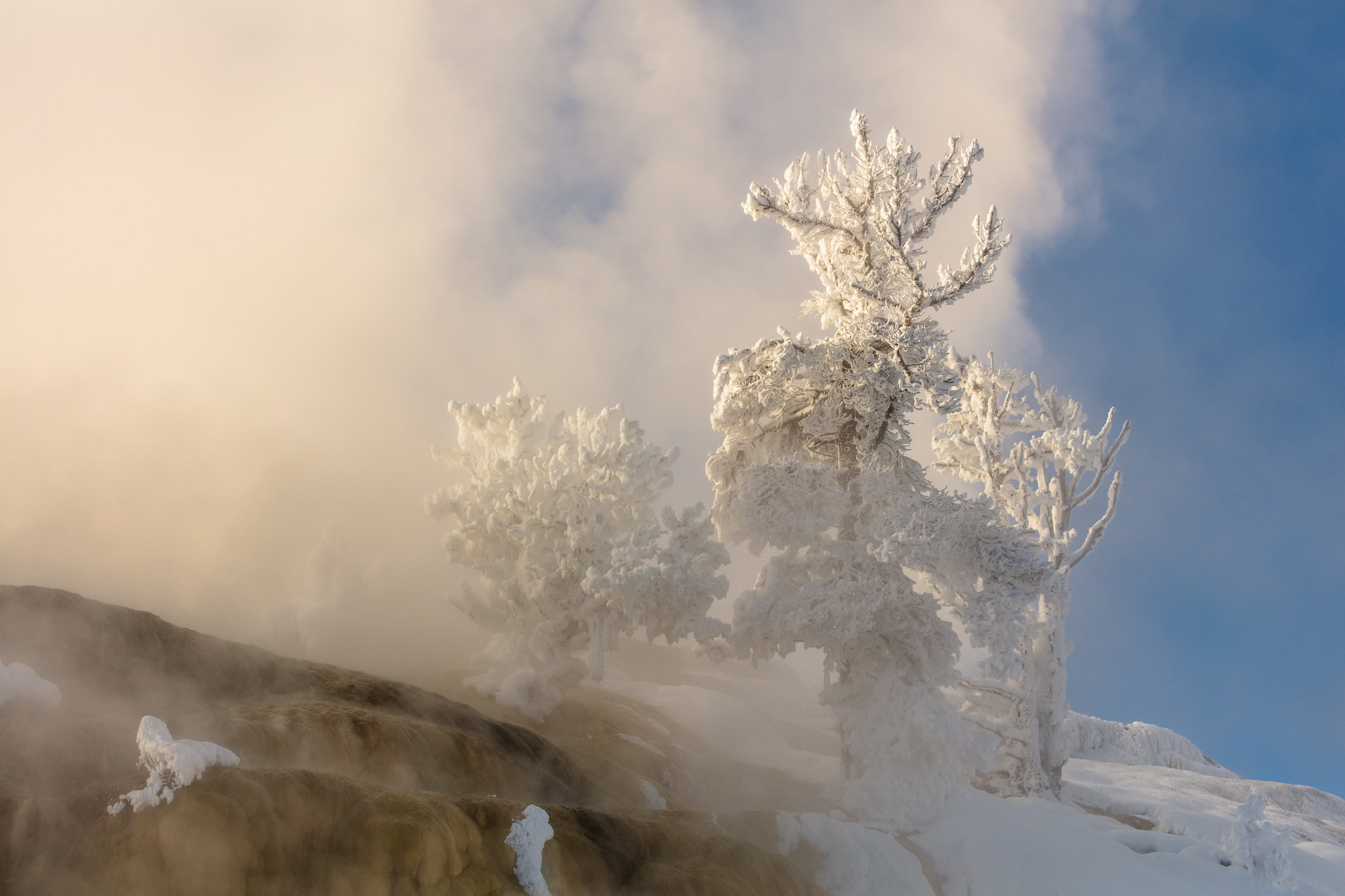
Your breath freezes in the frigid January air; last you checked, the thermometer in your vehicle read –25°F. Your hand instinctively wraps around the camera battery you’ve placed in your pocket as you wait patiently next to your tripod. Through binoculars, you notice an anticipated movement against the snowy landscape.
Action! You rush to ready your camera, and within seconds you are capturing a pair of wolves—wild wolves—silhouetted perfectly against the blanket of white.
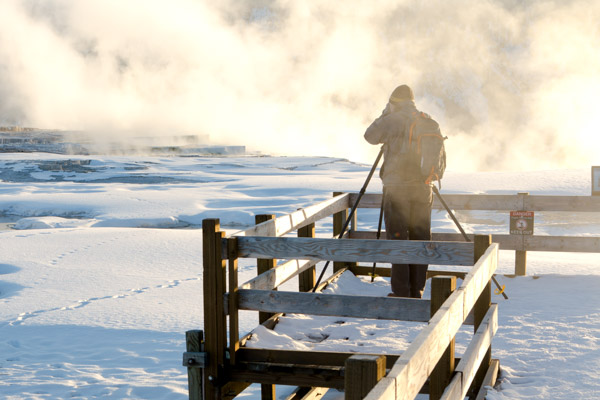 It’s a rare scene like this that motivates many photographers to come to Yellowstone, according to Meg Sommers, a professional photographer. The longtime resident of Cody, Wyoming says winter is an exceptional time to tell stories of the natural world through photography. Wildlife are easier to spot against the snow. Even the landscape offers something new and spectacular, she says, where “frost can turn a blade of grass into something extraordinary.”
But capturing these winter images comes with challenges. Sommers explains that photographers should be prepared to keep warm in sub-zero temperatures—knowing they may have to stay in one place for hours waiting for that perfect moment. She recommends wearing layers and bringing along hand warmers, as well as becoming familiar with the area they’ll be photographing.
In terms of equipment, Sommers advises all serious photographers to have a good camera body, a sturdy tripod, and a selection of lenses (both shorter and longer for landscapes and wildlife, respectively), as well as a solid understanding of their camera’s settings.
The equipment itself can present its own set of difficulties in winter, Sommers warns. Prolonged exposure to frigid temperatures can quickly zap the life out of batteries; she recommends keeping them in your pocket for warmth. Photographers should take care when they head back indoors, as the humidity in the warmer air will condense on the equipment. To prevent this, she suggests placing everything in a sealable bag—like a large Ziploc—before moving indoors.
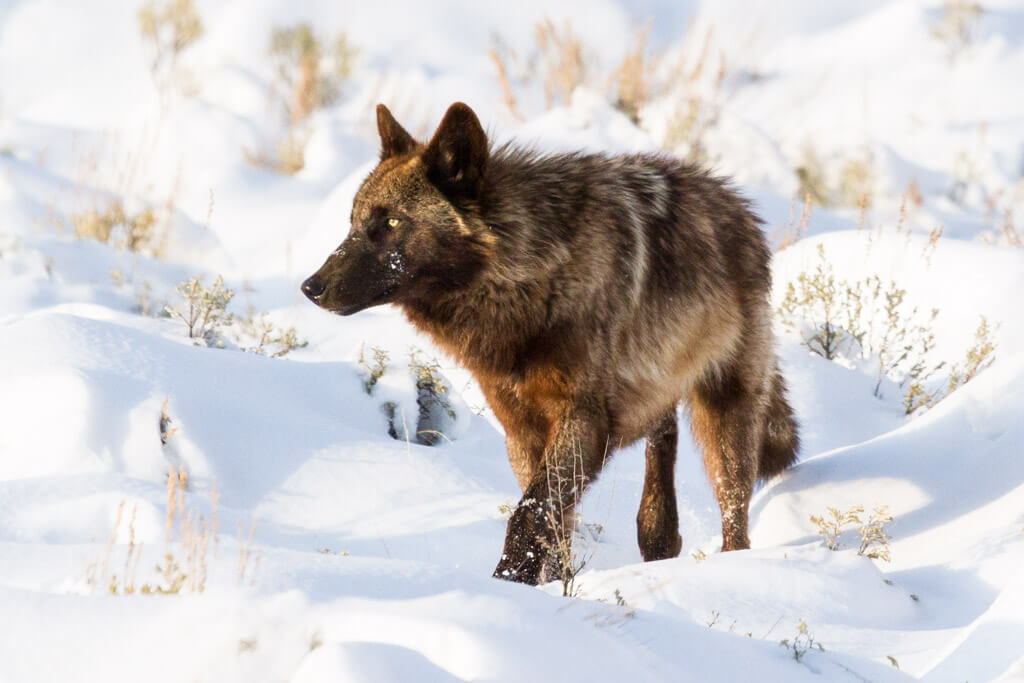 Wildlife photographers should also come to Yellowstone prepared with ample patience and respect for the wildlife they’re hoping to photograph. Learning to wait for that magic moment will get easier the more times you’re rewarded with a special image, Sommers says. The park requires all visitors to maintain a distance of at least 25 yards from wildlife and 100 yards from bears and wolves, both for the safety of the photographer and the wildlife.
With these tips in mind, Yellowstone’s winter world is wide open for those yearning to capture its unique beauty and the wildlife that call it home. For Sommers, photographing the wonders of the park in the winter is the perfect way to connect to the landscape, and well worth the inherent challenges.
“The lucky photographer will find animal behavior to photograph that helps to convey a story,” she says, “giving us some small insight into what life is like in that moment in time.”
Comments are closed.