
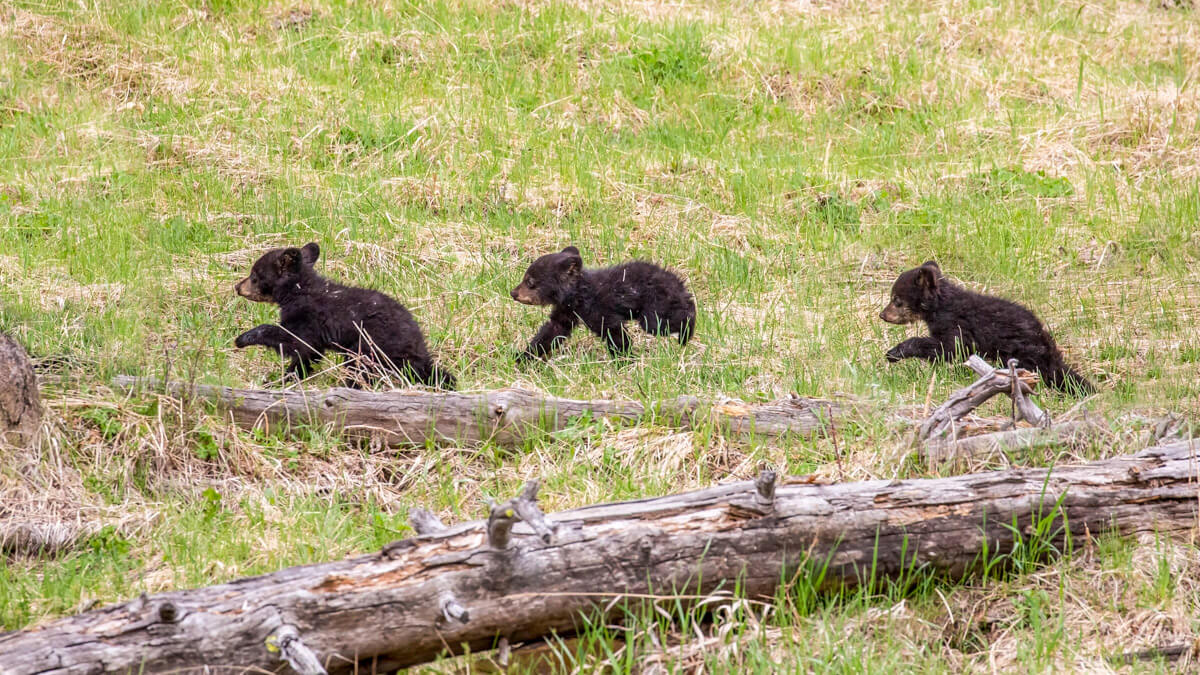
 March in Yellowstone comes with many things: snow, freezing temperatures, but also the first glimpses of spring. The first bison calves often drop, the earliest of wildflowers poke through, the sun peeks out a little longer each day, and as the park warms, visitors and wildlife alike are reminded that summer adventures are on their way. For most bears, March is when they begin to emerge from their winter slumber—rested, but usually ravenous, after persisting through the winter months using fat storages that they worked diligently to gain in the fall. However, female bears will stay in the den for a few more weeks, because she has a precious secret to protect: a bouncing baby bear cub.
Both grizzly bears and black bears live in Yellowstone throughout the year. They mate in the spring, sometimes with multiple partners, but do not give birth until the winter while they are in hibernation. This is due to a process called embryonic diapause, or delayed implantation. Delayed implantation allows female bears to devote their energy throughout the summer and fall to gaining fat storages. The female bears, or sows, will den starting in mid-November, and the fertilized egg will not implant, and start developing, until about a month later. If she has not gained enough weight to sustain herself and her cubs, the embryo will reabsorb into her system, preserving the sow’s own survival. Yet, if she has put on enough weight she will grow her fetus through the hibernation period, and give birth just under two months later.
When they give birth, black bears and grizzly bears will have 1-3 cubs on average. Baby bears are born in late January or early February—blind, deaf, hairless, toothless, about 8-12 ounces in weight, and about 8 inches long. It’s odd that an animal as formidable as a bear comes into this world so helpless, but this is part of nature’s design. Bears have evolved to have a shorter gestation period with a smaller baby that they can care for in the protection of the hibernation den as opposed to a longer gestation period that could deplete the mother’s protein storages and risk her survival. Survival of the fittest sometimes means being born tiny and vulnerable in a safe habitat that will allow for growth and preparation for the outside world. These newborns are completely reliant on the mother bear, as they sleep next to her, nurse, and grow quickly until hibernation is over. The sow will not leave the den to eat, drink, urinate, or even defecate during the hibernation period, even though she will wake periodically to nurse the cubs. Her milk is extremely rich in fat to help her cubs put on weight, as she needs all of her protein and carbohydrates to keep herself healthy during this time. The cubs will be 10-20 pounds in ten weeks’ time due to mom’s amazing milk.
 All bears will leave the den when temperatures are warm enough and food is available. While timing will vary depending on the year, the process of leaving the den will be completed by early May. Male bears and females without cubs will be away from their dens within a week of emerging, but females with cubs will stay within a couple of miles from the den site until late May. Although the cubs will have come a long way from their defenseless beginnings, they are still at risk to male bears and other predators. Their mothers are powerful defenders, though, and will go to extensive lengths to make sure their cubs are as protected as possible. Black bears will disperse from their mother after about 18 months while grizzly bears will remain with their mother for 2-3 years. This lengthy maternal care plays directly into the population dynamics of these two species, with grizzly populations often growing slower due to this longer investment in cubs.
The difficult, sacrificial work that a mother bear must go through to continue her species is an environmental, evolutionary miracle. Seeing a baby bear in the wilds of Yellowstone is very exciting, but always remember to stay 100 yards away from these adorable, fierce animals when visiting bear country.
by Yellowstone Forever Field Educator, Jenna Perryman
Photos:
Feature, Jim Futterer
Bear in den, YF / Sam Archibald
Grizzly cubs and sow, NPS / Eric Johnston
Black bear sow and cub on tree, Jim Futterer
Comments are closed.